
When Mid-Atlantic Businesses Should Service, Recharge, or Replace Fire Extinguishers
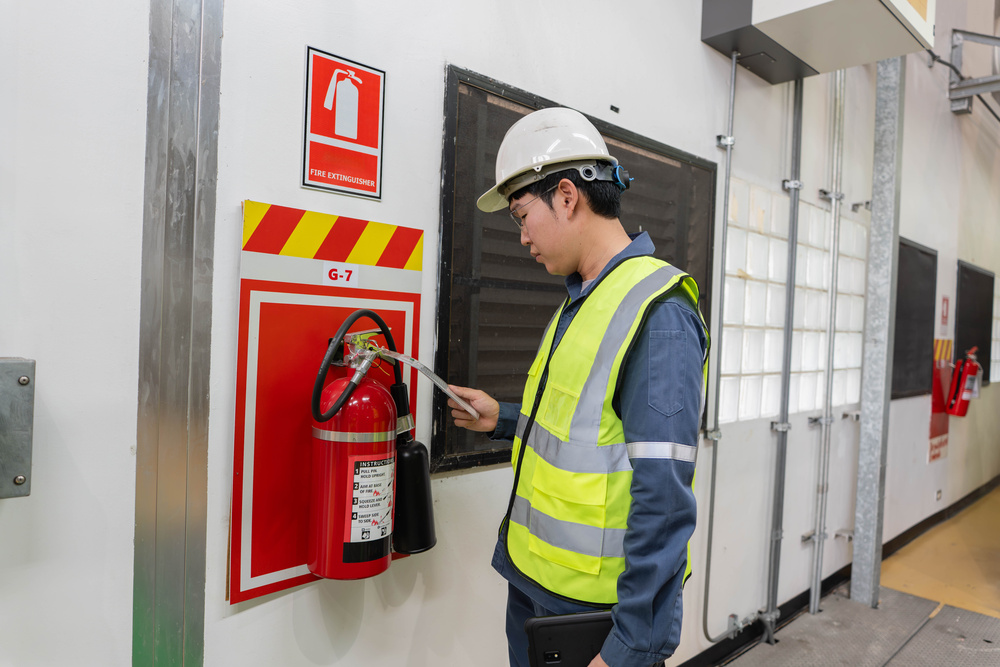
As a commercial fire protection provider serving Rockville, Maryland and the broader Mid-Atlantic region, we help property managers and facility teams meet strict fire extinguisher maintenance requirements. Fire extinguisher service is not optional in Maryland or Washington, DC. It is a documented compliance obligation that affects life safety, inspection results, and liability exposure.
Key Takeaways
- NFPA 10 requires monthly visual checks and an annual professional fire extinguisher inspection for commercial properties.
- Stored-pressure dry chemical units require six-year internal maintenance and 12-year hydrostatic testing.
- Any discharged unit requires immediate fire extinguisher recharge before returning to service.
- Corrosion, failed hydrostatic testing, or expired disposable models require full fire extinguisher replacement.
How to Keep Mid-Atlantic Fire Extinguishers Compliance Ready
Compliance begins with disciplined inspection routines. Accurate records protect your facility during audits. Consistent scheduling reduces the risk of missed service intervals. Clear documentation supports faster resolution during fire marshal reviews.
What NfPA 10 Requires for Annual Fire Extinguisher Inspection
The foundation of compliant fire extinguisher service is the annual maintenance requirement outlined in NFPA 10. Every commercial extinguisher must be inspected by a qualified technician at least once every 12 months. During a professional fire extinguisher inspection, we verify the correct agent type, confirm the pressure gauge is within the operable range, examine the hose and nozzle for blockage, inspect the pull pin and tamper seal, and attach a dated service tag. In Rockville, Maryland and surrounding jurisdictions, fire marshals routinely check manufacture dates, tags, and hazard classifications during site visits.
Why Monthly Visual Checks Are a Separate Obligation
Monthly visual checks serve a different purpose than annual maintenance. They are typically assigned to building engineers, safety coordinators, or operations managers. Staff must confirm the extinguisher remains in its designated location and is not obstructed by storage or equipment. The label must face outward and remain legible. The gauge must sit in the green operable zone. There must be no visible dents, corrosion, or discharge residue. If a deficiency appears, the unit should be removed and scheduled for fire extinguisher repair or recharge without delay. In multi-tenant office buildings and light-industrial spaces across Montgomery County, missed monthly checks are a common citation during Authority Having Jurisdiction inspections.
How the Six-Year Maintenance and 12-Year Testing Cycles Work
Stored-pressure ABC dry chemical extinguishers follow additional lifecycle rules. NFPA 10 requires complete internal maintenance every six years. This process includes full discharge, internal cylinder inspection, replacement of valve components and O-rings, refill with the correct extinguishing agent, and re-pressurization with nitrogen. At 12 years from the stamped manufacture date, the cylinder must undergo hydrostatic testing to verify structural integrity under pressure. Federal workplace rules such as OSHA reinforce these requirements. If a cylinder fails hydrostatic testing, it must be permanently removed from service and replaced. Wet chemical Class K extinguishers used in commercial kitchens follow a separate five-year hydrostatic testing schedule.
When Service, Recharge, or Replacement Makes Sense
Not every issue requires the same solution. Understanding the difference supports safety and budgeting decisions. Clear decision-making reduces unnecessary downtime and compliance exposure. Knowing when to act protects both occupants and operational continuity.
When a Fire Extinguisher Recharge Is Required
A fire extinguisher recharge is mandatory whenever a unit has been discharged, even briefly. A broken tamper seal, powder around the discharge horn, or reduced weight often signals prior use. The pressure gauge may still appear normal, but pressure alone does not confirm full agent capacity. Recharge restores the extinguisher to its rated performance and ensures compliance with fire extinguisher maintenance requirements. Prompt action prevents gaps in coverage during inspections or emergency events.
Signs a Fire Extinguisher Needs Service Before Its Scheduled Date
Certain warning signs require immediate fire extinguisher service. These include dented cylinders, cracked hoses, missing safety pins, clogged nozzles, faded labels, and visible corrosion. In high-humidity mechanical rooms, parking garages, or loading dock areas in Rockville, Maryland, corrosion can develop between inspection cycles. Surface rust may appear minor but can progress quickly. Early documented repair protects the cylinder shell and avoids premature fire extinguisher replacement.
When to Replace a Fire Extinguisher Instead of Recharging
Fire extinguisher replacement becomes necessary when structural integrity is compromised or lifecycle limits are reached. Cylinders that fail hydrostatic testing, show pitting corrosion, or display heat damage must be condemned. Disposable, non-rechargeable models carry a 12-year service life from the manufacture date. They must be removed at that threshold regardless of appearance. In some facilities, upgrading older units during a fire extinguisher installation project offers stronger long-term value than repeated internal maintenance. Reviewing service history and manufacture dates supports defensible capital planning decisions.
Schedule Fire Extinguisher Service in Rockville and the Mid-Atlantic
Stay prepared for inspections and reduce compliance risk. Protect occupants, assets, and daily operations.
Guardian Fire Protection Services provides commercial fire extinguisher service, inspection, recharge, and replacement throughout Maryland, Northern Virginia, and Washington, DC. Our team works with property managers, facility directors, and safety professionals to maintain documented compliance. Contact us to schedule service for your building.
Frequently Asked Questions
How often is fire extinguisher service required?
Commercial facilities must complete monthly visual checks and schedule an annual professional fire extinguisher inspection under NFPA 10. Stored-pressure dry chemical units also require six-year internal maintenance and 12-year hydrostatic testing based on the manufacture date.
Do businesses in Maryland and Washington DC need documented inspections?
Yes. Fire extinguisher maintenance requirements include documented annual service with a dated tag attached to each unit. Inspectors in Maryland and Washington, DC review tags, service intervals, and hazard classifications during fire marshal and safety inspections.
When should a fire extinguisher be replaced instead of recharged?
Replacement is required if a cylinder fails hydrostatic testing, shows structural corrosion or heat damage, or is a non-rechargeable model that has reached 12 years from manufacture. In those cases, recharge is not permitted.
What are common signs a fire extinguisher needs service?
Common warning signs include a pressure gauge outside the operable range, a broken tamper seal, a dented cylinder, a cracked hose, a clogged nozzle, or visible corrosion. Any of these conditions requires prompt professional evaluation.
Category: Fire Extinguishers Let us help.
Fill out the form and a Guardian fire safety specialist will contact you within 24 hours.
Let us help.
Fill out the form and a Guardian fire safety specialist will contact you within 24 hours.