
What Class K Fire Extinguishers Do in Commercial Kitchens
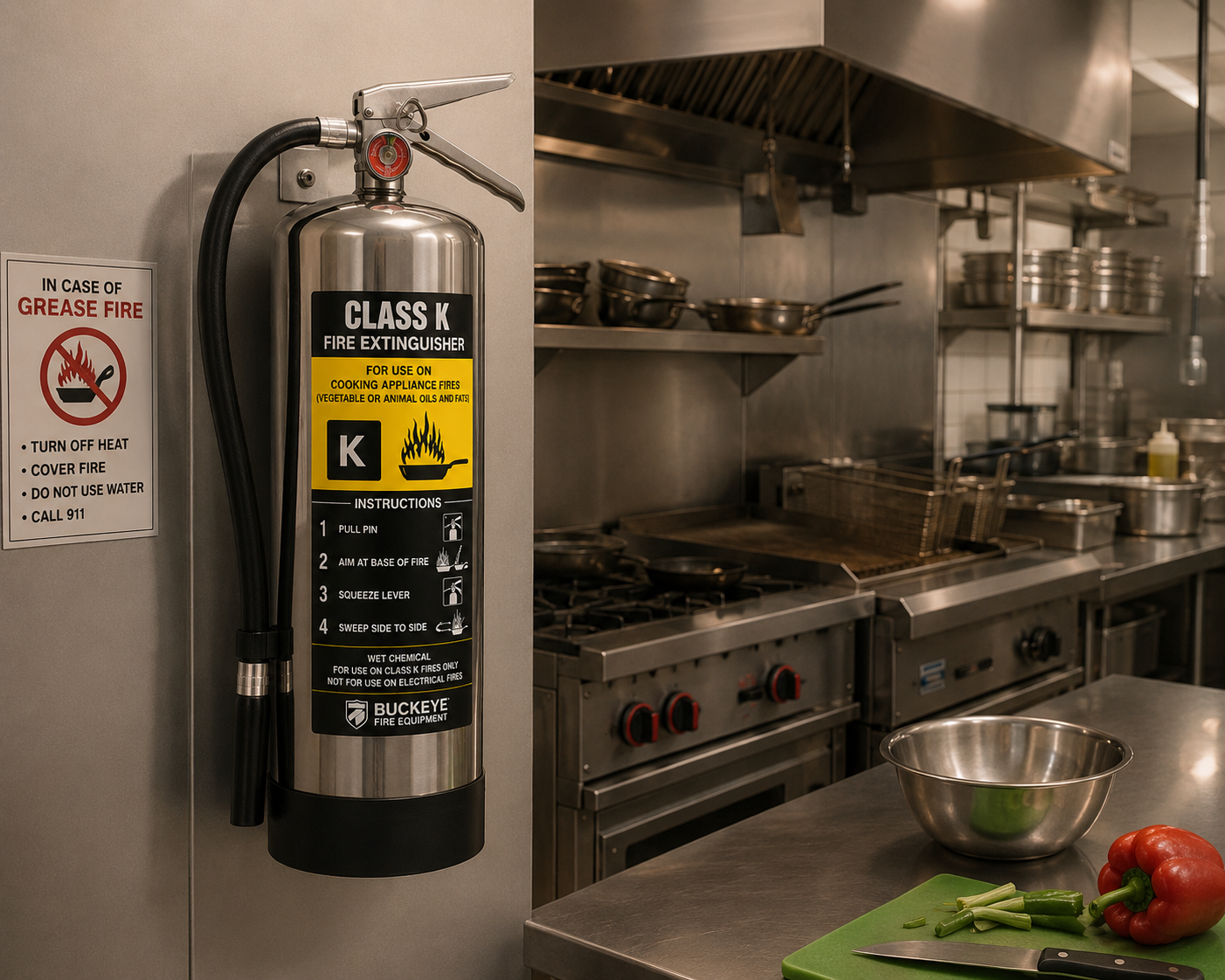
Commercial kitchens across Rockville, Baltimore, and the Mid-Atlantic region rely on properly selected fire protection to stay compliant. High-temperature cooking equipment, open-flame appliances, and large volumes of vegetable oil increase fire risk in these environments. In Maryland, Northern Virginia, and Washington, DC, code compliance is closely enforced in commercial occupancies.
Key Takeaways
- A Class K fire extinguisher provides cooling, wet chemical, and saponification capabilities that standard ABC extinguishers cannot.
- NFPA 10 requires Class K extinguishers within 30 feet of commercial cooking equipment using vegetable oils or animal fats.
- Standard ABC dry chemical extinguishers interrupt flames but do not reduce hot oil below its ignition temperature.
- Commercial kitchens must pair Class K capability with documented inspection, placement, and maintenance readiness steps.
- A portable Class K unit is required even when an automatic hood suppression system is installed.
What Class K Extinguishers Do That Standard Ones Cannot
Class K extinguishers provide a specific capability that standard ABC units cannot match. Grease fires require cooling, chemical reaction, and oxygen control working together. Dry chemical alone cannot stabilize overheated cooking oil or prevent rapid reignition. Effective commercial kitchen fire protection depends on this specialized capability and proper integration with hood suppression systems.
Cooling Capability That Prevents Reignition
The primary capability of a Class K fire extinguisher is active cooling of burning cooking oil. Cooking oils and animal fats burn at extremely high temperatures and can reignite after flames are knocked down. Standard Class A or Class B extinguishers interrupt flames but do not reduce oil below its autoignition point. Class K wet chemical agents cool the fuel surface and absorb heat at the source. This process lowers the temperature and reduces the risk of rapid flare-ups in Maryland, Northern Virginia, and Washington, DC commercial kitchens. This cooling action is critical because commercial fryers often maintain oil near ignition temperatures during peak-service hours.
Wet Chemical Capability Designed for Commercial Kitchens
Another key capability is the use of a potassium-based wet chemical solution such as potassium acetate or potassium citrate. The agent discharges as a controlled, low-velocity mist to limit splashing and spread. This design allows the chemical to settle onto burning oil instead of pushing flames toward adjacent appliances. The mist pattern improves operator control during an emergency response. Proper fire extinguisher installation ensures this capability remains accessible within the required travel distance and is not blocked by equipment or storage.
Saponification Capability That Smothers and Seals
A final capability unique to Class K extinguishers is saponification. When the wet chemical contacts burning oil, it forms a thick foam layer over the fuel surface. This foam blocks oxygen and creates a temporary seal that helps prevent reignition. The reaction stabilizes the oil surface long enough for staff to shut off gas or electric supply. This dual-action capability separates a Class K kitchen fire extinguisher from other portable classifications and aligns with UL 300 standards evaluated by UL Solutions.
Commercial Kitchen Fire Readiness Steps Before Emergencies
Preparing before a grease fire occurs is essential in any commercial kitchen. Each readiness step supports compliance, safety, and faster response during an incident. Clear procedures and documented service reduce confusion during high-stress situations and inspections.
Verify Proper Class K Placement and Coverage
One essential readiness step is confirming that the correct Class K extinguisher is installed near fryers and open-flame cooking equipment. NFPA 96 mandates a portable Class K unit regardless of kitchen size. Even a single fryer station can trigger this requirement. Units must remain visible and accessible without reaching over active hazards. Regular fire extinguisher repair and scheduled maintenance help ensure the unit functions properly during an emergency.
Confirm Mounting, Access, and Travel Distance
Another readiness step is verifying mounting height, bracket security, and required travel distance. Food trucks in Montgomery County and Baltimore City must meet the same NFPA 10 and NFPA 96 standards as fixed facilities. A properly mounted 1.6-gallon unit within 30 feet of cooking equipment is typically required. Travel distance is measured along the normal path of access, not in a straight line. Inspectors often review accessibility, labeling, and service tags during permitting visits.
Maintain Inspection Records and Documentation
A final readiness step is keeping inspection records current and accessible. Hospitals, universities, and school cafeterias in the Mid-Atlantic region often operate multiple cooking lines under high-occupancy conditions. Written documentation demonstrates that monthly visual checks and annual professional service have been completed. Documented fire extinguisher inspection supports compliance during audits and routine fire marshal reviews.
Protect Your Commercial Kitchen With the Right Class K Fire Protection
Choosing the correct extinguisher is only one part of compliance. Ongoing inspection and documentation support long-term protection and reduce operational disruption after an incident.
Guardian Fire Protection Services provides professional inspection and maintenance for commercial kitchen fire protection systems throughout Maryland, Northern Virginia, and Washington, DC. We help ensure every Class K fire extinguisher meets NFPA 10 requirements and local standards. Our team works with restaurants, property managers, healthcare facilities, and institutional clients.
Request a quote through our website or contact us to schedule service and speak with a fire protection specialist.
Frequently Asked Questions
What is a Class K fire extinguisher used for?
A Class K fire extinguisher is used for fires involving cooking oils, animal fats, and grease in commercial kitchens. Its wet chemical agent cools oil, forms a foam layer, and helps prevent reignition.
Can a Class K fire extinguisher be used on any fire?
Class K extinguishers are designed for commercial cooking hazards involving oils and fats. They are not intended for ordinary combustibles, electrical equipment, or flammable gas fires.
Is a Class K extinguisher required if a hood suppression system is already installed?
Yes. NFPA 10 requires a portable Class K extinguisher as a backup even when an automatic hood suppression system is installed. The portable unit is used after system activation and fuel shutoff.
How often does a Class K fire extinguisher need to be inspected?
Class K extinguishers require monthly visual inspections and an annual professional inspection under NFPA 10. Internal maintenance is required at six-year intervals, with hydrostatic testing per manufacturer guidelines.
Category: Fire Extinguishers Let us help.
Fill out the form and a Guardian fire safety specialist will contact you within 24 hours.
Let us help.
Fill out the form and a Guardian fire safety specialist will contact you within 24 hours.