
Fire Extinguisher Classes and Ratings Explained for Maryland, DC, and Northern Virginia Businesses
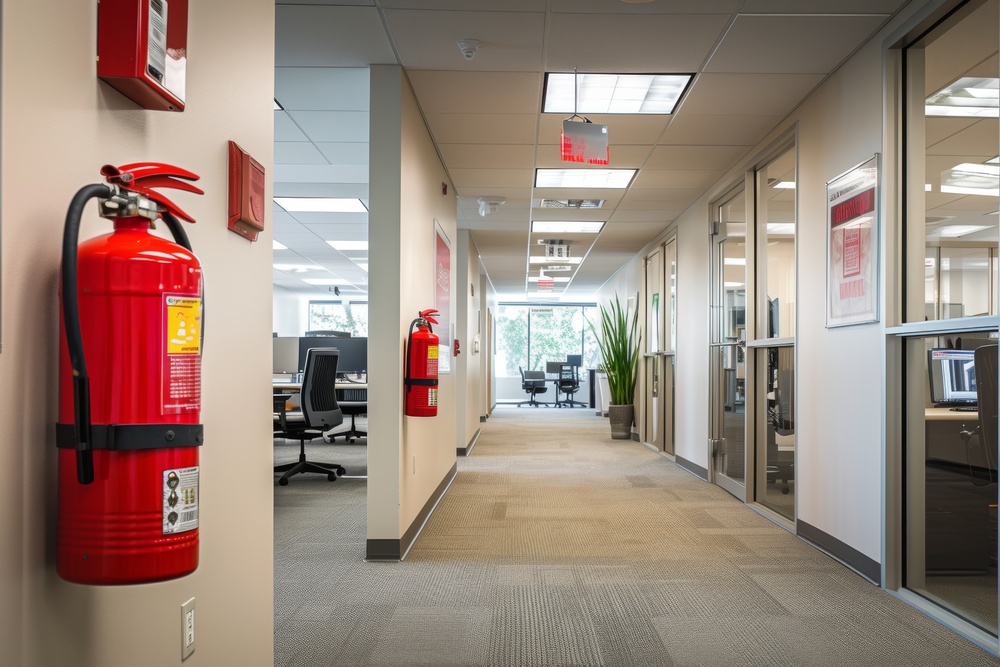
Understanding fire extinguisher classes and ratings is essential for commercial facilities across Maryland, Washington, DC, and Northern Virginia. Selecting the correct fire extinguisher class and rating supports OSHA compliance, aligns with NFPA 10 requirements, and helps businesses address real-world fire risks within their buildings.
Key Takeaways
- There are five fire extinguisher classes, each designed for a specific fuel source.
- Using the wrong fire extinguisher can intensify a commercial fire and increase liability.
- NFPA 10 sets travel-distance and maintenance standards, while OSHA enforces workplace compliance.
- Commercial kitchens require Class K fire extinguishers within 30 feet of cooking equipment.
- Inspection, documentation, and training support full fire-code compliance.
What Fire Extinguisher Classes Mean for Businesses
Fire extinguisher classes identify the fuel type a unit is designed to suppress. Businesses must match each fire extinguisher class to the hazards present within their facilities.
Class A Fire Extinguishers
Class A fire extinguishers protect against ordinary combustibles such as paper, wood, cloth, and plastics. These materials are common in offices, healthcare facilities, schools, and multi-tenant commercial buildings across Maryland, Washington, DC, and Northern Virginia.
Class A coverage is typically required in general business areas where combustible materials are present.
Class B Fire Extinguishers
Class B fire extinguishers are designed for flammable liquids such as gasoline, oils, solvents, and paints. These hazards are often found in maintenance rooms, loading docks, fleet-storage areas, and generator enclosures.
Businesses storing or handling liquid fuels must ensure proper Class B coverage.
Class C Fire Extinguishers
Class C fire extinguishers use non-conductive agents suitable for energized electrical equipment. Electrical panels, data rooms, control systems, and server closets require Class C protection. Many commercial facilities rely on ABC fire extinguishers that combine Class A, Class B, and Class C coverage.
Routine fire extinguisher inspection confirms that properly classified units remain charged, accessible, and compliant with NFPA 10 standards from the National Fire Protection Association.
Class D Fire Extinguishers
Class D fire extinguishers are required for combustible metals such as magnesium or lithium. These hazards are typically present in manufacturing operations, laboratories, and specialized industrial environments.
Class D agents are metal-specific, and selecting the wrong agent can intensify a fire.
Class K Fire Extinguishers
Class K fire extinguishers are mandatory in commercial kitchens that use vegetable oils and cooking fats. Restaurants, hospitals, and institutional kitchens must position Class K units within 30 feet of cooking equipment.
The wet-chemical agent cools burning oil and helps prevent re-ignition. Proper fire extinguisher installation ensures compliant placement and mounting.
What Fire Extinguisher Ratings Mean for Businesses
Fire extinguisher ratings measure how much fire a unit can control. The number that appears before the letter classification represents suppression capacity under standardized testing.
Class A Ratings
For Class A extinguishers, the numerical rating reflects water-equivalency performance.
A 2A extinguisher has twice the extinguishing capacity of a 1A unit. Higher Class A ratings provide greater protection for ordinary combustible hazards.
Class B Ratings
For Class B extinguishers, the number indicates the approximate square footage of flammable-liquid fire the unit can suppress. Higher ratings allow coverage of larger liquid-fuel hazards commonly found in commercial operations.
Class C Designation
Class C does not include a numerical rating. Instead, it confirms the extinguishing agent is non-conductive and safe for energized electrical equipment. This designation is essential in electrical rooms, data centers, and control panels.
National testing guidance from UL Solutions supports these performance classifications.
Businesses must ensure ratings align with occupancy hazard levels and travel-distance requirements. OSHA enforces portable fire extinguisher rules under 29 CFR 1910.157 through the Occupational Safety and Health Administration.
When units are damaged or discharged, timely fire extinguisher repair helps maintain rated performance and workplace compliance.
How to Choose the Right Extinguishers for Your Facility
Selecting the right fire extinguishers requires evaluating hazard type, occupancy classification, and facility layout. Businesses should review stored materials, ignition sources, and required travel distances before finalizing equipment selection.
Conduct a Hazard Assessment by Area
Each zone within a building may present different risks. Offices, kitchens, maintenance rooms, and storage areas often require different fire extinguisher classes and ratings. A documented hazard assessment ensures equipment matches actual fire exposure.
Confirm Travel-Distance and Placement Requirements
NFPA 10 establishes maximum travel-distance limits based on hazard classification.
Class A hazards typically allow up to 75 feet of travel, while Class B hazards are limited to 50 feet. Travel distance must follow actual walking paths, not straight-line measurements.
Maintain Ongoing Inspection and Documentation
Monthly visual inspections and annual professional maintenance are required for commercial fire extinguishers. Six-year internal examinations and 12-year hydrostatic testing may also apply. Consistent documentation supports OSHA compliance and long-term reliability.
Protect Your Maryland, DC, and Northern Virginia Buildings With the Right Fire Extinguisher Class
The right equipment supports safer outcomes. Proper placement supports compliance. Scheduled service protects your investment.
Guardian Fire Protection Services has supported commercial facilities across Maryland, Washington, DC, and Northern Virginia since 1979. We provide inspection, maintenance, repair, installation guidance, and compliance support for commercial fire extinguishers in offices, restaurants, healthcare facilities, and multi-tenant properties.
Contact us to speak with our team about your facility.
Frequently Asked Questions
What are the five classes of fire extinguishers?
The five classes are A, B, C, D, and K. Class A covers ordinary combustibles, Class B flammable liquids, Class C energized electrical equipment, Class D combustible metals, and Class K commercial cooking oils and fats.
What is a Class K fire extinguisher used for?
A Class K fire extinguisher uses a wet-chemical agent for commercial kitchen fires involving vegetable oils and animal fats. NFPA 10 requires these units to be within 30 feet of cooking equipment. They cannot replace standard ABC dry-chemical extinguishers.
How often do commercial fire extinguishers require professional inspection?
Commercial fire extinguishers require monthly visual inspections and annual professional maintenance under NFPA 10 and OSHA rules. Many units also require a six-year internal examination and a 12-year hydrostatic pressure test to remain compliant.
What fire extinguisher class is required for electrical fires?
Class C-rated fire extinguishers are required for energized electrical equipment because they use non-conductive agents. Most ABC extinguishers include Class C coverage. Water-based extinguishers should never be used on active electrical fires due to shock risk.
Category: Fire Extinguishers Let us help.
Fill out the form and a Guardian fire safety specialist will contact you within 24 hours.
Let us help.
Fill out the form and a Guardian fire safety specialist will contact you within 24 hours.