
A Property Manager’s Guide to Fire Sprinkler Inspection and Testing Requirements in the DMV
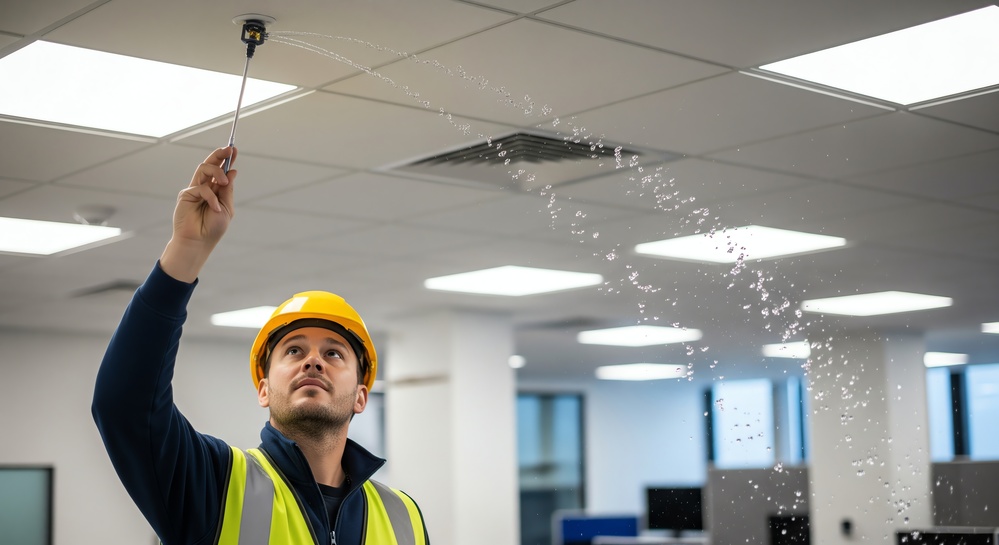
Fire sprinkler inspection and testing requirements follow a structured schedule under NFPA 25, and local authorities may apply additional requirements depending on the jurisdiction. For property managers in Maryland, Northern Virginia, and Washington, DC, that means compliance is not just about following one national standard. It also means confirming what the local authority having jurisdiction requires for your building, system type, and occupancy.
Managing a commercial property in Maryland & Surrounding Metro Areas often involves multiple inspection intervals, documentation expectations, and impairment procedures.
This guide explains the core inspection and testing framework, where local review may come into play, and how to approach planning, records, and service coordination in a way that supports code compliance and building safety.
Key Takeaways
- NFPA 25 sets recurring inspection, testing, and maintenance intervals for water-based fire protection systems.
- Property managers must account for NFPA requirements and local AHJ expectations when planning sprinkler service.
- Impairment procedures should be addressed before work begins, including required notifications and temporary safeguards.
- ITM (Inspection, Testing, Maintenance) records help demonstrate compliance and support follow-up with inspectors, insurance companies, and internal stakeholders.
How to Meet the DMV Fire Sprinkler ITM and Compliance Requirements
Staying compliant with sprinkler inspection and testing requirements involves more than booking one annual visit. The following considerations highlight the requirements and practical steps commercial property managers and facility teams should understand when overseeing sprinkler systems in the DMV.
Understand What NFPA 25 Requires at Different Intervals
NFPA 25 is the standard commonly used for the inspection, testing, and maintenance of water-based fire protection systems. Depending on the component, tasks may fall on weekly, monthly, quarterly, annual, or longer multiyear intervals.
Guardian’s sprinkler inspection also emphasizes recurring monthly, quarterly, annual, 5-year, and 10-year inspection needs for commercial systems.
In practice, different intervals focus on different parts of the system.
Some tasks are primarily visual. Others involve functional testing, alarm verification, or performance checks.
Because each interval addresses a different part of system reliability, missing one inspection or test may still leave the property exposed to compliance issues or missed deficiencies.
Do Not Overlook Longer-Cycle Sprinkler Requirements
Annual service is only part of the picture. Depending on the type of sprinkler and system configuration, some components may be subject to longer-cycle testing or replacement requirements under the applicable standard.
For property managers, the practical point is simple: do not assume annual inspections cover every long-term requirement automatically.
A complete inspection and testing program should track recurring annual work and less frequent multiyear items so they do not get missed.
Confirm What the Local AHJ Requires
Maryland, Virginia, and the District of Columbia each operate within their own code and enforcement environment. Local AHJs may have their own expectations for notifications, documentation, permits, witness testing, or scheduling.
Because of that, a compliant service plan in one jurisdiction may still need adjustments in another.
Before major testing, impairments, or corrective work, it is smart to confirm local requirements directly with the AHJ or through a qualified fire protection partner familiar with that jurisdiction. That step can help reduce avoidable delays and lower the risk of documentation or scheduling gaps.
Maintain Complete ITM Documentation
Inspection, testing, and maintenance records are a core part of a defensible compliance program. At a minimum, records should clearly show what was inspected or tested, when the work was performed, what conditions were found, what corrective action was recommended or completed, and when the next interval is due.
For commercial properties in the Washington-Baltimore corridor, complete records also make it easier to respond when fire officials, insurance representatives, or internal risk teams request documentation.
Missing records do not automatically mean the system was not serviced, but they can create compliance problems and make it harder to demonstrate that required work was completed.
Use Qualified Professionals for Inspection and Testing
Sprinkler inspection and testing should be performed by qualified professionals. State or local rules may set additional licensing or certification requirements depending on the jurisdiction and scope of work.
For property managers, the safest approach is to verify that the provider is appropriately qualified for the service being performed and familiar with local code expectations.
That helps support reliable testing, clearer documentation, and more consistent follow-up when deficiencies are identified.
Address Deficiencies Promptly
Not every inspection finding carries the same urgency, but all deficiencies should be evaluated and addressed based on their severity, the applicable standard, and AHJ expectations.
Some conditions may call for immediate corrective action, especially when system performance or availability is affected. Other issues may allow for scheduled repair within an appropriate correction window. Either way, unresolved deficiencies can create operational risk and may receive closer scrutiny during future inspections or reviews.
Plan Dry Pipe Testing Carefully
Dry pipe systems often require more coordination than wet systems because testing can involve water discharge, drain-down, and weather-related considerations.
For facilities with dry pipe systems in parking structures, loading docks, or unheated areas, it often makes sense to plan testing when site conditions are easier to manage.
Milder weather can help reduce freezing concerns during drain-down and may make scheduling easier for both the property team and service provider.
How to Build an AHJ Coordination and Impairment Response Plan
When a fire sprinkler system must be taken out of service, NFPA 25 outlines specific procedures that property owners and facility managers must follow to maintain life safety and regulatory compliance. The steps below summarize common planning items for managing planned and emergency impairments in commercial facilities.
Designate an Impairment Coordinator Before Work Begins
Assign one person to own coordination for the impairment, including confirming who must be notified, identifying the affected area, and documenting when the system is returned to service.
Notify the AHJ Based on Local Requirements
Because impairment notification expectations can vary by jurisdiction and situation, confirm whether the AHJ expects advance notice and what details they want before the system is taken offline.
Understand When a Fire Watch May Be Required
A fire watch is not automatic. If one is required, follow the applicable procedures for coverage, patrol documentation, and any AHJ direction based on the conditions at the site.
Schedule Impairments During Low-Occupancy Periods When Practical
When scheduling is possible, choose a time that reduces disruption and makes temporary safeguards easier to manage, especially for occupied or multi-tenant properties.
Keep Emergency Contacts Current
Keep a current list of the fire sprinkler service provider, monitoring contacts if applicable, site decision-makers, and after-hours contacts so an unplanned impairment does not turn into a communication scramble.
Close Out Every Impairment With Clear Documentation
Document the start and end time, what was affected, return-to-service confirmation, and any follow-up testing or notifications required.
Keep Your System in Compliance With Guardian Fire Protection
Fire sprinkler inspection and testing requirements can be complex, especially for commercial properties managing multiple service intervals, documentation demands, and jurisdictional expectations.
Guardian Fire Protection Services has served commercial properties across Maryland, Northern Virginia, and Washington, DC, for over 40 years. Our team provides Fire Sprinkler Systems inspection, testing, maintenance, and repair for commercial facilities, and also offers 24/7 emergency service across its service area.
Contact us to schedule an inspection or request a quote for your property in the Greater Washington area.
Frequently Asked Questions
How often should fire sprinkler systems be inspected and tested?
Fire sprinkler systems are inspected and tested at different intervals based on the component and system type. Commercial properties often have monthly, quarterly, annual, 5-year, and 10-year requirements.
What are the NFPA 25 requirements for sprinkler inspection?
NFPA 25 sets the framework for inspecting, testing, and maintaining water-based fire protection systems. Exact tasks and intervals depend on the equipment, and local jurisdictions may add requirements.
What is the 3 times rule for sprinklers?
The 3 times rule is a commonly referenced NFPA 13 concept for certain obstruction conditions near sprinklers. Actual placement depends on the obstruction’s type, size, and location.
What happens if a deficiency is found during a fire sprinkler inspection?
If a deficiency is found, the response depends on its severity and effect on system performance. Some issues need immediate action, while others may be repaired within the applicable correction window.
For related questions on sprinkler systems, fire alarms, extinguishers, and other commercial fire protection topics, see Guardian Fire Protection’s Fire Protection FAQs.
Category: Fire Sprinklers Let us help.
Fill out the form and a Guardian fire safety specialist will contact you within 24 hours.
Let us help.
Fill out the form and a Guardian fire safety specialist will contact you within 24 hours.