
What Restaurant Owners Should Know Before Installing an Ansul System
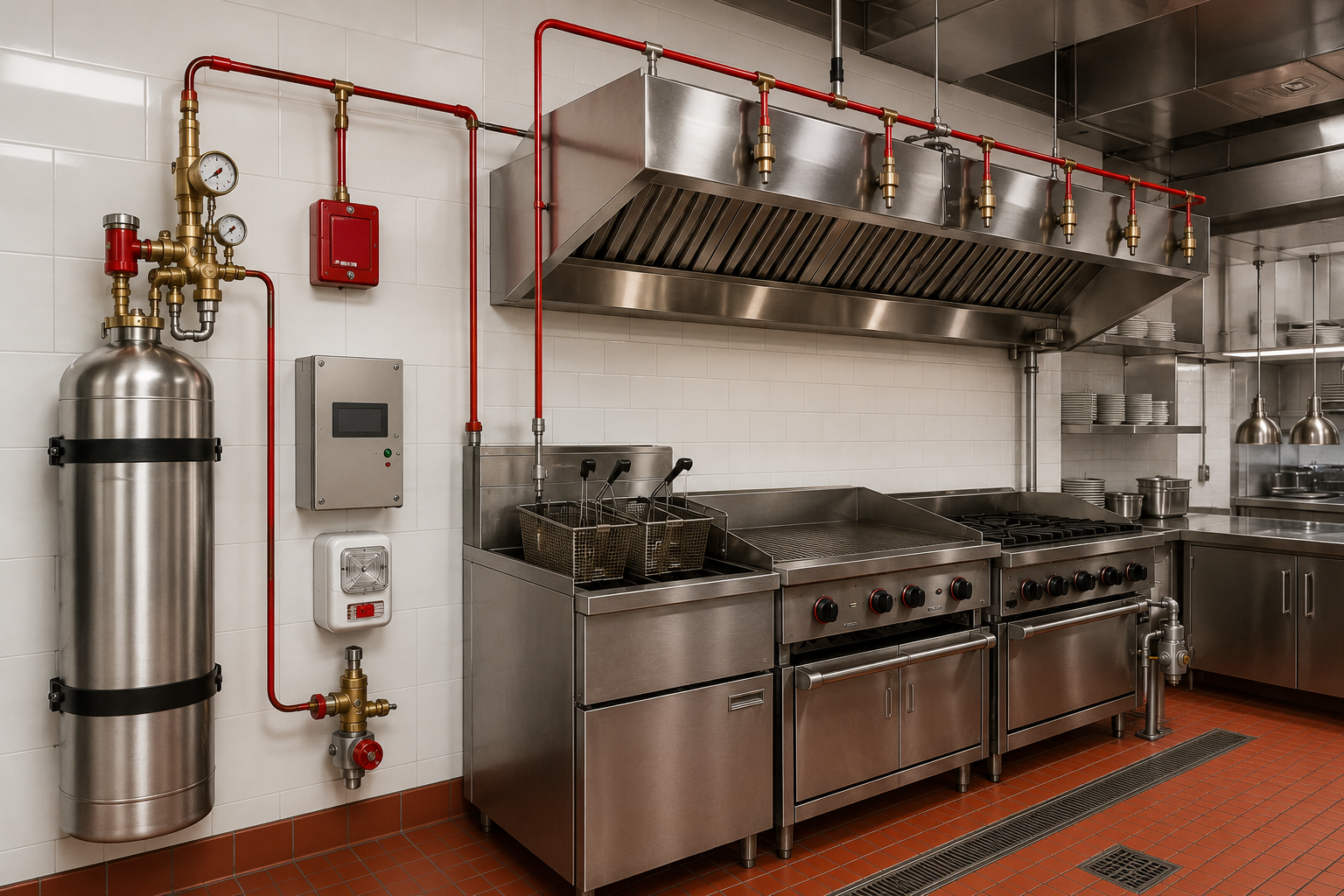
Managing a commercial kitchen in Rockville, Maryland, or across Maryland, Northern Virginia, and Washington, DC requires careful planning for grease fire risk. A single flare-up can halt operations, damage equipment, and create code violations. We help restaurant owners understand what is required before installing an Ansul kitchen fire suppression system and how to stay compliant long-term.
Key Takeaways
- The Ansul R-102 is a UL-300-compliant, pre-engineered wet chemical fire suppression system designed to protect commercial kitchen hoods, ducts, and cooking appliances from grease fires.
- Maryland codes require approved automatic fire-extinguishing systems in commercial cooking operations, including automatic fuel and power shutoff.
- NFPA 96 and NFPA 17A govern installation, inspection, maintenance, and documentation throughout Maryland, Northern Virginia, and Washington, DC.
- Professional inspections are required every six months, and staff must perform documented monthly visual checks.
- Equipment or hood changes can require system redesign to maintain compliance.
Key Ansul System Requirements for DMV Restaurant Kitchens
Commercial kitchen fire suppression systems must meet state and national standards. Understanding these requirements before installation prevents delays and failed inspections. For a full overview of system components and compliance expectations, review our commercial kitchen fire suppression page.
What an Ansul System Is and How It Protects a Commercial Kitchen
An Ansul fire suppression system is a pre-engineered, automatic wet chemical system designed to detect and suppress fires at the cooking surface before they spread into the hood and duct system. In Rockville, Maryland, and throughout the DMV region, the Ansul R-102 protects fryers, griddles, ranges, broilers, and woks.
The system is listed to the UL 300 standard, maintained by UL Solutions, to address modern high-temperature cooking oils. When fusible links detect heat, the system discharges ANSULEX liquid agent. The agent cools burning grease and forms a foam blanket that helps prevent re-ignition. Nozzle selection and coverage zones must follow the manufacturer manual and align with NFPA 17A.
How the Hood and Suppression System Function as One Assembly
The hood and the Ansul system operate as one integrated fire-protection assembly. The hood captures grease-laden vapors, while discharge nozzles align with each appliance hazard zone. System layout must comply with NFPA 96, published by the National Fire Protection Association.
Inspectors in jurisdictions such as Montgomery County and Prince George’s County review nozzle placement, duct coverage, and appliance protection during plan review. If you are planning a new build or renovation, explore our commercial kitchen installation services to understand design and approval steps.
Automatic Fuel and Power Shutoff Is Mandatory
Maryland code requires automatic shutdown of fuel and electrical power when a kitchen fire suppression system activates. This function is achieved through properly wired gas-valve and electrical interlocks connected to the release mechanism. Code requirements can be reviewed through the Maryland Department of Labor building code resources.
During inspections in Baltimore, Maryland, and Silver Spring, Maryland, fire marshals verify that interlocks function correctly. Failure to shut off fuel increases the risk of re-ignition after discharge. Interlock testing must be documented during scheduled inspections.
Installation, Inspections, and Ongoing Compliance
Installation is only the first step. Long-term compliance depends on permitting, routine inspections, documented maintenance, and coordination with other life-safety systems.
Permitting and Approved Installation Come First
Restaurant owners must obtain approval from the local authority having jurisdiction before installation begins. Permit packages include working drawings, hood details, and system design information. Starting work before approval in jurisdictions such as Frederick, Maryland, or Annapolis, Maryland, can result in delays and rework.
Working with a qualified contractor improves first-round approval success. Our team outlines the full process through our commercial kitchen installation program so operators understand expectations before opening.
Semi-Annual Inspections and Monthly Visual Checks
NFPA 96 requires professional inspection and service at six-month intervals. These semi-annual inspections include checking agent levels, piping, fusible links, detection lines, interlocks, and pull stations.
Learn more about inspection scope on our commercial kitchen inspection services page. Between visits, managers should conduct monthly visual checks to confirm nozzles are unobstructed and components show no damage. Maintaining inspection tags and service reports supports smoother fire marshal reviews.
Portable extinguishers protecting cooking areas must also remain serviceable. If units are discharged or damaged, schedule service through our fire extinguisher repair program to maintain overall compliance.
Equipment Changes Require System Re-Evaluation
Replacing or repositioning cooking equipment can trigger compliance updates. A larger fryer, new appliance type, oil change, or layout modification may alter hazard coverage and require nozzle adjustments. UL 300 listings are appliance-specific, meaning changes can invalidate the original design.
Before completing renovations in Bethesda, Maryland, Gaithersburg, Maryland, or Washington, DC, have the system evaluated to confirm it still meets UL 300 and NFPA standards. Proactive review reduces the risk of violations and operational disruptions.
Protect Your DMV Restaurant Kitchen
Staying compliant with Maryland fire code requires proper design, documented inspections, and responsive service support.
Guardian Fire Protection Services has protected Maryland, Northern Virginia, and Washington, DC since 1979 and is a Diamond Level Ansul Distributor. We provide commercial kitchen fire suppression installation, inspection, and service for restaurants and institutional food service facilities.
Contact us to request a quote or speak with our team. We respond within 24 hours and coordinate services around your schedule.
Frequently Asked Questions
What is an Ansul system in a commercial kitchen?
An Ansul system is a pre-engineered wet chemical fire suppression system for commercial cooking operations. It detects heat, discharges liquid agent onto appliances and hoods, and helps prevent grease fires from spreading through the exhaust system.
How often must a kitchen fire suppression system be inspected?
NFPA 96 requires professional inspection every six months by a qualified fire protection company. The kitchen owner or manager should also perform and document basic monthly visual inspections.
Does changing cooking equipment require system updates?
Yes. Adding, replacing, repositioning, or upgrading appliances can change hazard zones and nozzle coverage.. A licensed contractor must evaluate and adjust the system to maintain UL-300 and NFPA compliance.
How much does an Ansul system cost for a restaurant?
Costs vary based on kitchen size, appliance configuration, hood layout, and permit requirements. A site assessment by an authorized Ansul distributor is required to provide an accurate estimate.
Category: Fire Protection Let us help.
Fill out the form and a Guardian fire safety specialist will contact you within 24 hours.
Let us help.
Fill out the form and a Guardian fire safety specialist will contact you within 24 hours.