
How Detectors, Panels, and Notification Devices Work Together During a Fire Emergency
Commercial fire alarm systems in Rockville, MD, and across the Mid-Atlantic region are engineered networks designed to detect, communicate, and respond within seconds. As a service provider supporting life safety systems for commercial buildings, we work with property managers, facility directors, and building engineers to ensure every component performs reliably under real emergency conditions.
Key Takeaways
- Fire alarm systems rely on coordinated commercial fire alarm components that detect conditions, process signals, and activate notification devices without delay.
- The fire alarm control panel interprets device inputs and determines how fire alarm notification devices and connected building systems respond.
- NFPA 72 establishes enforceable inspection, testing, documentation, and battery performance standards for commercial occupancies.
- Fire alarm monitoring in Maryland helps ensure alarm signals are transmitted quickly to supervising stations and emergency responders.
How Detectors, Panels, and Notification Devices Coordinate Fire Response
Each layer of a commercial system serves a defined role. Reliability depends on proper device selection, programming, integration, and ongoing service. When properly maintained, modern fire alarm systems function as coordinated networks rather than isolated components.
What Initiating Devices Actually Do in a Commercial Building
Initiating devices form the detection layer of commercial fire alarm systems. Smoke detectors, heat detectors, duct detectors, pull stations, and waterflow switches convert environmental changes into signals transmitted to the fire alarm control panel. In a multi-tenant Rockville office building with variable-air-volume HVAC, poorly located duct detectors can miss smoke migration patterns if airflow is not evaluated during layout review and commissioning. In commercial kitchens, rate-of-rise heat detectors help reduce nuisance alarms caused by steam. Server rooms often require photoelectric detection for early smoldering conditions. Device placement must align with the spacing and performance criteria outlined in NFPA 72.
How the Fire Alarm Control Panel Interprets Signals
The fire alarm control panel serves as the processing center for all fire alarm system parts. It receives device inputs and executes programmed response logic based on occupancy type and building configuration. Conventional systems identify alarms by zone, which may represent several thousand square feet. Addressable systems assign each device a unique digital identifier, allowing the panel to display a precise location such as a suite number or riser room. In large Mid-Atlantic commercial properties, that specificity reduces investigation time and improves coordinated response. Panels are evaluated against listing standards from organizations such as UL Solutions to confirm signal processing and annunciation meet recognized safety benchmarks.
What Fire Alarm Notification Devices Must Deliver
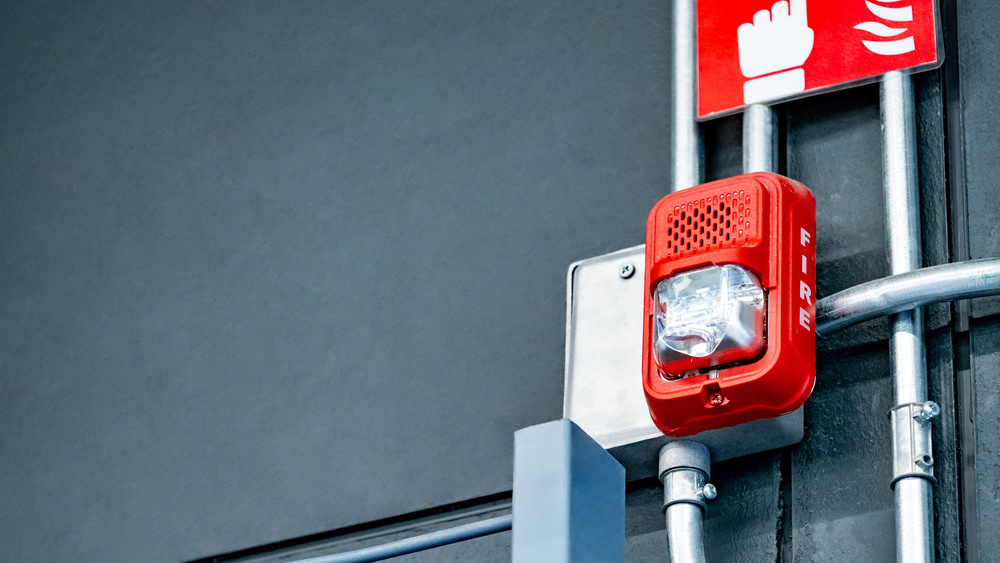
Fire alarm notification devices translate panel commands into occupant action. NFPA 72 requires audible appliances to sound at least 15 dBA above average ambient noise levels. Mechanical rooms, loading docks, and warehouse areas often require additional horn-strobe coverage to meet that threshold. Visible notification must comply with listed candela ratings and spacing requirements. During a fire alarm system inspection, technicians verify candela settings, synchronization, and circuit integrity. When exit routes change during tenant renovations, coordination with emergency lighting systems helps ensure alarms and illumination operate together during utility power loss.
System Testing Priorities and Response Planning for Mid-Atlantic Facilities
Inspection, documentation, and coordinated testing ensure commercial fire alarm components perform as designed when needed most. Consistent procedures also support inspection readiness and regulatory compliance.
Why NFPA 72 Sets the Baseline for Testing Frequency
NFPA 72 establishes minimum inspection and testing intervals for commercial fire alarm systems. Most jurisdictions require annual system testing at a minimum. The code also mandates secondary power capacity for 24 hours of standby operation, followed by five minutes in full alarm, or 60 minutes for voice evacuation systems. In Maryland and Washington, DC, authorities typically adopt NFPA 72 with local amendments based on occupancy classification and building height. Facilities teams should verify adoption cycles through the International Code Council framework to confirm enforcement timelines.
What a Comprehensive Fire Alarm System Inspection Must Cover
A comprehensive fire alarm system inspection includes functional testing of initiating devices, verification of signal transmission to the fire alarm control panel, confirmation of notification appliance performance, and review of programming changes. Smoke detectors must be tested to confirm that smoke entering the sensing chamber initiates an alarm condition. Electronic simulation alone does not verify chamber performance. For properties supported by fire alarm monitoring services, coordination with the supervising station before and after testing prevents unintended dispatch and documents signal receipt times.
When to Evaluate and Upgrade Aging Fire Alarm System Parts
Most addressable smoke detectors have a listed service life of 10 to 15 years. Control panels often approach obsolescence within 15 to 20 years as manufacturers discontinue replacement boards and modules. Commercial facilities constructed or renovated in the early 2000s throughout the Mid-Atlantic region may now operate on aging hardware with limited parts availability. Evaluating equipment age during routine service allows property managers to phase upgrades strategically. Planned replacement reduces the likelihood of emergency failures and supports long-term capital planning tied to life safety systems for commercial buildings.
Protect Your Commercial Building with Guardian Fire Protection
Properly maintained fire alarm systems are essential for inspection readiness and occupant protection. Guardian Fire Protection supports commercial stakeholders throughout Maryland, Northern Virginia, and Washington, DC, with inspection, testing, repair, monitoring, and service for fire alarm systems and related life safety systems for commercial buildings. Contact us to discuss your current system or schedule service.
Frequently Asked Questions
What are the main commercial fire alarm components?
Commercial fire alarm components include initiating devices such as smoke and heat detectors, a fire alarm control panel that processes signals, fire alarm notification devices including horns and strobes, and monitoring connections that notify emergency responders.
How does a fire alarm control panel communicate with monitoring centers in Maryland?
When an alarm occurs, the fire alarm control panel transmits a signal through a dedicated communication pathway to a supervising station. The monitoring center logs the signal and notifies emergency authorities according to established response protocols.
How often is a fire alarm system inspection required for commercial buildings?
NFPA 72 requires commercial fire alarm systems to be inspected and tested at least annually in most jurisdictions. Additional testing intervals may apply depending on occupancy classification, local amendments, and direction from the authority having jurisdiction.
Are addressable fire alarm systems required in Washington, DC commercial buildings?
Washington, DC, follows adopted fire and building codes that frequently require addressable systems in larger or more complex commercial occupancies. Final requirements depend on building size, occupancy type, and approval from the local authority having jurisdiction.
Category: Fire Alarms Let us help.
Fill out the form and a Guardian fire safety specialist will contact you within 24 hours.
Let us help.
Fill out the form and a Guardian fire safety specialist will contact you within 24 hours.